
There is a common assumption that hormones are something to think about at 50. So when a woman in her early or mid 30s says her PMS has gotten much worse, she wakes at 3 a.m. most nights, her anxiety has crept up, and her weight will not move, she is often told she is too young for this to be hormonal.
Often, she is not. Hormones start shifting well before menopause, and for many women the first changes show up in their 30s. Here is what changes, what else can cause the same symptoms, and how our hormone imbalance treatment approaches women at this stage.

What changes with hormones in your 30s?
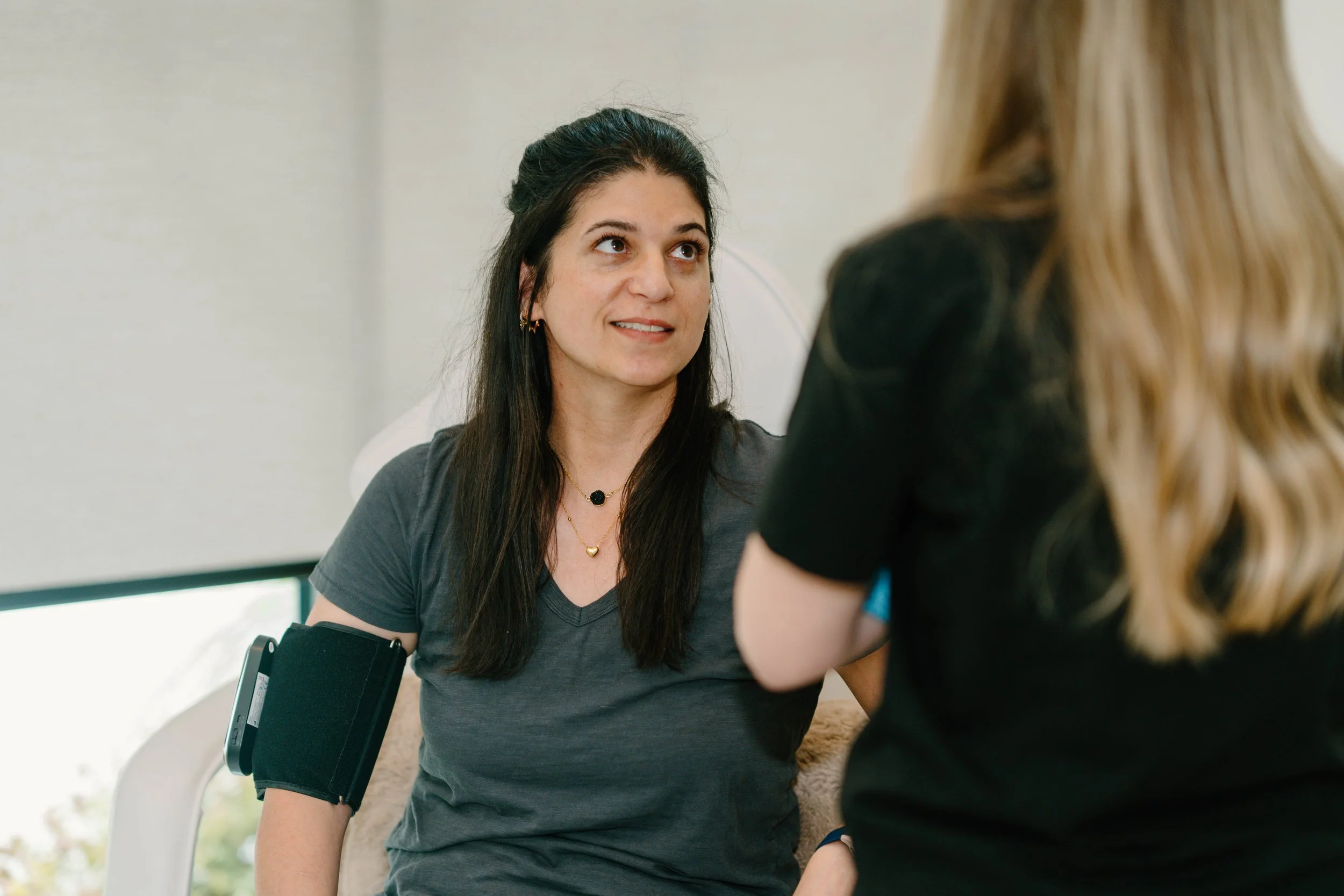
The first hormone to slip is usually progesterone, not estrogen.
Progesterone is made after ovulation. Through your 30s, ovulation becomes a little less reliable, and some cycles produce less progesterone or skip ovulation altogether. Estrogen may stay normal or even run high in comparison. That imbalance, sometimes called relative estrogen dominance, explains a lot of what women in their 30s describe.
Progesterone has a calming effect on the brain and supports deep sleep. When it drops, sleep and mood are often the first things to go.
Signs your hormones may be shifting in your 30s
PMS that is stronger or lasts longer than it used to
Trouble staying asleep, especially waking between 2 and 4 a.m.
New or worse anxiety, particularly in the week or two before your period
Heavier periods, more cramping, or shorter cycles
Breast tenderness, bloating, and water retention
Weight gain around the hips and middle that does not respond to what used to work
Lower libido
Headaches or migraines around your cycle
None of these are rare, and none are something you just have to live with. If several sound familiar, the free female hormone quiz is a quick way to see what your symptoms may point to.
It is not always progesterone
Hormone symptoms in your 30s have several common causes, and part of good care is figuring out which ones apply to you.
Thyroid problems often appear in this decade, especially Hashimoto's, which is far more common in women. Thyroid changes after pregnancy are common too. Fatigue, hair thinning, weight gain, and low mood can all be thyroid.
Cortisol matters. Careers, young kids, and years of short sleep put a sustained load on the stress response. High cortisol pulls resources away from progesterone and interferes with thyroid conversion.
PCOS often becomes more obvious in this decade, with irregular cycles, acne, and weight that clusters around the middle, along with insulin resistance.
Coming off birth control can unmask symptoms that the pill was covering for years.
And women make testosterone too. Low levels can show up as low drive, low libido, and losing muscle tone despite training.
Is hormone therapy safe in your 30s?
It depends on what is being treated and how. Hormone therapy in your 30s usually looks very different from menopause care.
For a woman whose labs show low progesterone in the second half of her cycle, bioidentical progesterone timed to that part of the cycle may support sleep, mood, and cycle symptoms. Small amounts of testosterone may be appropriate for some women with clearly low levels. In many cases, the plan starts somewhere else entirely: thyroid support, blood sugar, nutrients like iron and vitamin D, or work on the cortisol pattern.
The key is that treatment follows testing. Starting hormones without labs, or because a friend did, is how women end up feeling worse.
If you are trying to get pregnant or might be soon, tell your provider. That changes what is appropriate.
How do you test hormones in your 30s?
Timing matters. Progesterone is best measured around 7 days after ovulation, often about day 19 to 22 of a 28-day cycle. A single random draw can be misleading.
A useful panel for a woman in her 30s includes estradiol and progesterone timed to the cycle, testosterone and DHEA, a full thyroid panel with antibodies, a cortisol pattern, fasting insulin and glucose, ferritin, vitamin D, and B12. Our article on what to expect at your first hormone consultation walks through how that works.
If you want answers instead of being told to wait it out, book a consultation and we will start with the right labs.
When does perimenopause actually start?
For most women, perimenopause begins in the 40s, but it can start in the late 30s. The early phase is mostly the progesterone side of the picture, with estrogen swings coming later. Our article on perimenopause symptoms and how hormone therapy helps covers what comes next.
Frequently asked questions
Can you have a hormone imbalance at 30?
Yes. Falling progesterone, thyroid disease, PCOS, high stress, and post-pill changes all commonly show up in women in their 30s.
What are the signs of low progesterone?
Worsening PMS, anxiety before your period, trouble staying asleep, heavier periods, spotting before your period, and shorter cycles are common signs.
Can I do hormone therapy while trying to get pregnant?
Some treatments, like progesterone support, are used in fertility care, while others are not appropriate. Tell your provider if pregnancy is a goal so the plan reflects it.
Will birth control solve my hormone symptoms?
Birth control can control some symptoms, but it replaces your natural hormone pattern rather than showing what is causing the problem. Symptoms often return when you stop.
Is 35 too young for bioidentical hormones?
Not if your labs and symptoms support it. Bioidentical progesterone in particular is commonly used in women in their 30s and 40s.
Get answers at any age
You do not need to be in menopause to be taken seriously. Learn more about our hormone imbalance treatment, book a consultation, or call 918-842-7872 to talk with our team in Owasso.